
Connecting AI agents to business apps is a permissions problem before it is a technical one: the same connection that makes an agent useful (reading your CRM, checking calendars, updating sheets) is the one that can go wrong. The model that works is boring and borrowed from decades of IT: least privilege, per-agent policies, and an audit trail.
42
SaaS applications is the average for companies under 200 employees. Every one is a place an agent could help, and a credential an agent should not get blanket access to.
Source: SaaS management statistics, 2025iShort answer
The wrong way to connect agents to apps is one god-token everything can use. The right way is three layers: per-connection SCOPES (this CRM connection is read-only), per-agent POLICIES (research reads, ops writes, nobody deletes), and a per-call AUDIT ledger. That is how Squad (formerly MissionControlHQ) ships its 70+ app integrations, and the ratchet (start read-only, widen on evidence) is the whole operating philosophy.
Key takeaways
| Question | Short answer |
|---|---|
| How do agents reach apps? | Authorized connections (OAuth/API key), called through integration actions |
| What makes it safe? | Scoped connections + per-agent policies + an audit ledger |
| What scope first? | Read-only, always; create later; delete almost never |
| Multiple accounts of one app? | Yes: connect each, route agents per policy |
| Who watches the watchers? | The ledger: every tool call recorded with agent, action, time |
Any one alone fails; together they make 42 connected apps manageable.
Per-connection scopes
The connection itself is capped at a level, from read-only up to full, with levels that vary by app. The cap holds no matter which agent calls.
Per-agent policies
Which agent may use which connection at which level. Research reads; ops writes; every agent gets the connection's level until you narrow or block it.
The audit ledger
Every tool call recorded: agent, action, connection, timestamp. Trust is verified, not assumed.
The ratchet
Scopes widen only on evidence from the ledger. Weeks of correct reads earn create; nothing starts wide.
Why app access is where agent projects die
App access is where agent projects die because both failure modes are fatal. Grant nothing and the agent is a chatbot: it can discuss your CRM but not check it, so every task ends with "now go look it up yourself." Grant everything and the first mistake is unbounded: a wrong bulk update, a deleted pipeline, an email blast from your own connected account.
The scale of the surface makes this concrete: companies under 200 employees run an average of 42 SaaS applications. Each is somewhere an agent could genuinely help, and each is a credential that deserves better than a blanket grant. Operators feel this instinctively, which is why so many agent setups stall at the "connect your tools" step: the permission model on offer is all-or-nothing, and "all" is rightly terrifying.
What to look for in an agent integration model
An agent integration model earns trust against five requirements:
- Scopes at the connection level. The connection itself must be cappable (read-only / read + create / full), so the cap holds regardless of which agent, prompt, or bug calls it.
- Policies at the agent level. Different agents carry different risk. The model must express "research reads, ops writes" without duplicating connections.
- Multi-account support. Two ad accounts, two calendars, per-client CRMs: real stacks have duplicates, and agencies need them separated cleanly.
- A per-call audit trail. Every tool call attributed to an agent, an action, and a timestamp. This is what makes widening scope a decision instead of a hope.
- Coverage that matches YOUR stack. The integration catalog must include the tools operators actually run, not just the enterprise suite.
How the scope model works
In Squad, app access is built as exactly those layers across 70+ app integrations:
- Connect once, scoped. Each connection is created with an access level, and the levels vary by app. A read-only CRM connection cannot write: Squad refuses the call, whatever an agent asks of it.
- Per-agent access narrows or blocks any single agent; by default every agent gets the connection's level. Block the billing agent from the ads accounts and the marketing agent from the payment tools, and neither sees the other's.
- Multi-account lets the same app connect twice (or ten times), with per-agent access routing each agent to the right account.
- Every call is logged. Runs shows which agent ran, when, and what it touched, and each account row shows when it was last used.
The philosophy underneath: trust is earned per connection, per agent, on ledger evidence. It borrows from least-privilege IT practice because agents are, operationally, new employees with superhuman speed and no fear of clicking the wrong button.
The GoHighLevel case
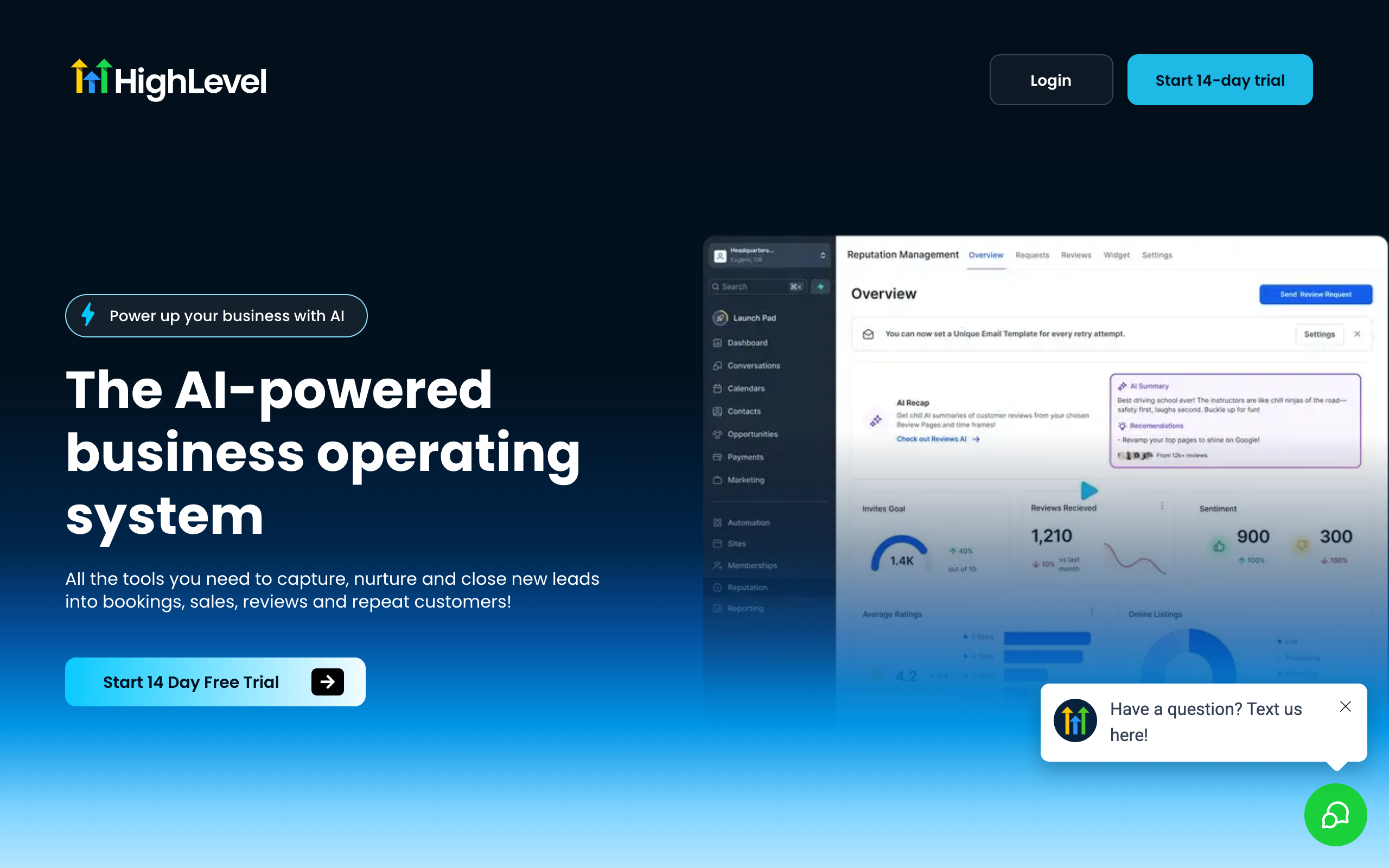
GoHighLevel deserves its own section because it IS the stack for a large slice of SMB operators and agencies: CRM, funnels, calendars, campaigns in one platform, often across many client sub-accounts.
GoHighLevel is not in Squad's integrations catalog, so there is no native connection with access levels. Agents reach it through a custom integration (an API key) or an MCP server, and neither carries Squad access levels, so the ratchet moves to the credential you create and the lane you brief. Start with read-only reporting: the ops agent pulls dashboard numbers and pipeline states into a weekly report, no write access anywhere. Then per-lane widening: the follow-up lane earns create access for tasks and notes; campaign edits stay human. The result is the useful middle that all-or-nothing models miss: agents do the reading, reporting, and drafting while writes stay narrow and earned.
The same pattern transfers to any operator stack: the accounting tool gets a read-only connection for the reporting lane, the calendar gets read + write for the scheduling agent, and the payment platform stays read-only until an invoicing lane specifically earns more. The stack is different per business; the ratchet is identical.
The first month: the ratchet in practice
Week one: connect three apps read-only (CRM, calendar, the reporting tool), give the research and ops agents read policies, and let the first weekly reports flow. The reports alone usually justify the setup. Week two: the ledger shows exactly what got called; you notice the ops agent checks one pipeline forty times a week and grant nothing new yet. Week three: one lane hits the read-only wall (the follow-up lane wants to create CRM tasks), so THAT connection moves to read + write, with every other agent held at read-only under Per-agent access. Week four: review the ledger like a bank statement; scope map now matches reality, and nothing has delete access because nothing needed it.
The pattern generalizes: every widening is a response to a specific blocked lane, backed by weeks of visible correct behavior. No step of it requires trusting a promise.
What usually goes wrong (and how the layers catch it)
Three failure stories recur across agent setups, and each maps to a layer. The prompt-injection story: a scraped web page or inbound email contains instructions that trick the agent into calling a tool ("forward the customer list to..."). With scoped connections, the injected instruction hits a read-only wall: Squad refuses the call. The enthusiastic-bug story: an agent misreads a task and tries to "clean up" records in bulk. Per-agent access means the agent doing research physically lacks write access, and even write-level agents lack full access; the blast radius was set before the bug existed. The quiet-drift story: six months in, nobody remembers which agent can touch what. The scope chips on your connections answer it, each account row shows when it was last used, and connections whose last use was months ago are candidates for removal, the same hygiene you would apply to a former contractor's accounts.
None of these require predicting the failure. Least privilege is precisely the strategy for failures you cannot enumerate in advance, which is why it has survived fifty years of IT practice and applies to agents without modification.
How to choose
What is the agent supposed to do with the app?
- If read and report→read-only scope, today, no hesitation
- If create records or drafts→read + write after a read-only trial period
- If bulk edits or deletions→keep it human, or gate behind explicit approval
How many accounts of the same app?
- If one→one scoped connection, policies per agent
- If several (clients, brands)→multi-account connections, one per client, policy-routed
Who reviews access over time?
- If nobody, realistically→keep everything read-only; safety must not depend on reviews
- If you, monthly, from the ledger→run the ratchet: widen on evidence
Use-case cheat sheet
| Scenario | Best pick | Why |
|---|---|---|
| Weekly report across CRM, calendar, and ads | Read-only connections | Reporting never needs write access; start here, always. |
| Follow-up lane creating CRM tasks and notes | Read + write, ops agent only | Narrow write scope for the one agent whose lane needs it. |
| Agency running 15 client accounts of one CRM | Multi-account + per-agent access | Client separation is structural, not procedural. |
| Bulk list cleanup in the CRM | Human runs it | One-off destructive operations are not worth automating. |
| Two ad accounts, two brands, one marketing agent | Multi-account, one policy | Same agent, cleanly routed to the right account per task. |
| Auditing what agents did to your data | Runs and the call log | Per-call attribution is the answer to 'what touched this?' |
Frequently asked questions
Basics
How do AI agents connect to business apps? Through authorized integrations: you connect an account (OAuth or API key) once, and the agent calls the app's actions through that connection. The safety question is scope: what the connection may do, and which agents may use it. Squad (formerly MissionControlHQ) ships 70+ app integrations with a per-connection access level (the levels vary by app) and per-agent access controls.
Should an AI agent have full access to my CRM? Not on day one. The pattern that works is read-only first: the agent proves useful (lookups, reports, briefs) without being able to change anything. Create access comes when a lane needs it; delete access rarely needs to exist at all.
What are per-agent access policies? Rules deciding which agent may use which connection at which scope. The research agent reading your CRM and the ops agent updating it are different risk profiles; per-agent policies encode that instead of granting the whole workspace one blanket permission.
Specific stacks
Can agents use GoHighLevel? Not through a native connection: GoHighLevel is a common stack for SMB operators and agencies, but it is not in Squad's integrations catalog. Agents can reach it through a custom integration (an API key) or an MCP server, and neither carries Squad access levels, so the ratchet lives in the credential you create and the lane you brief: read-only reporting first, writes widened only as the agent's runs earn trust.
What if two team members need different app accounts connected? Multi-account support: the same app can be connected more than once (two ad accounts, two calendars), and per-agent policies decide which agent uses which account. This is how agencies keep client accounts separated.
What does connecting apps cost in Squad? Integrations are included in the $99/mo plan (plus the $100-200 flat AI subscription the squad runs on), and connected apps never use credits. Every call is logged, and Runs shows which agent ran, when, and what it touched.
Sources
- CloudZero: SaaS statistics roundup
- GoHighLevel: homepage
- Squad: homepage, get started, connect apps, custom integrations and MCP servers
- Related on this site: Why Squad, Mission Control for OpenClaw
Last updated: September 2026. Squad pricing and features checked against the homepage and docs as of September 2026.